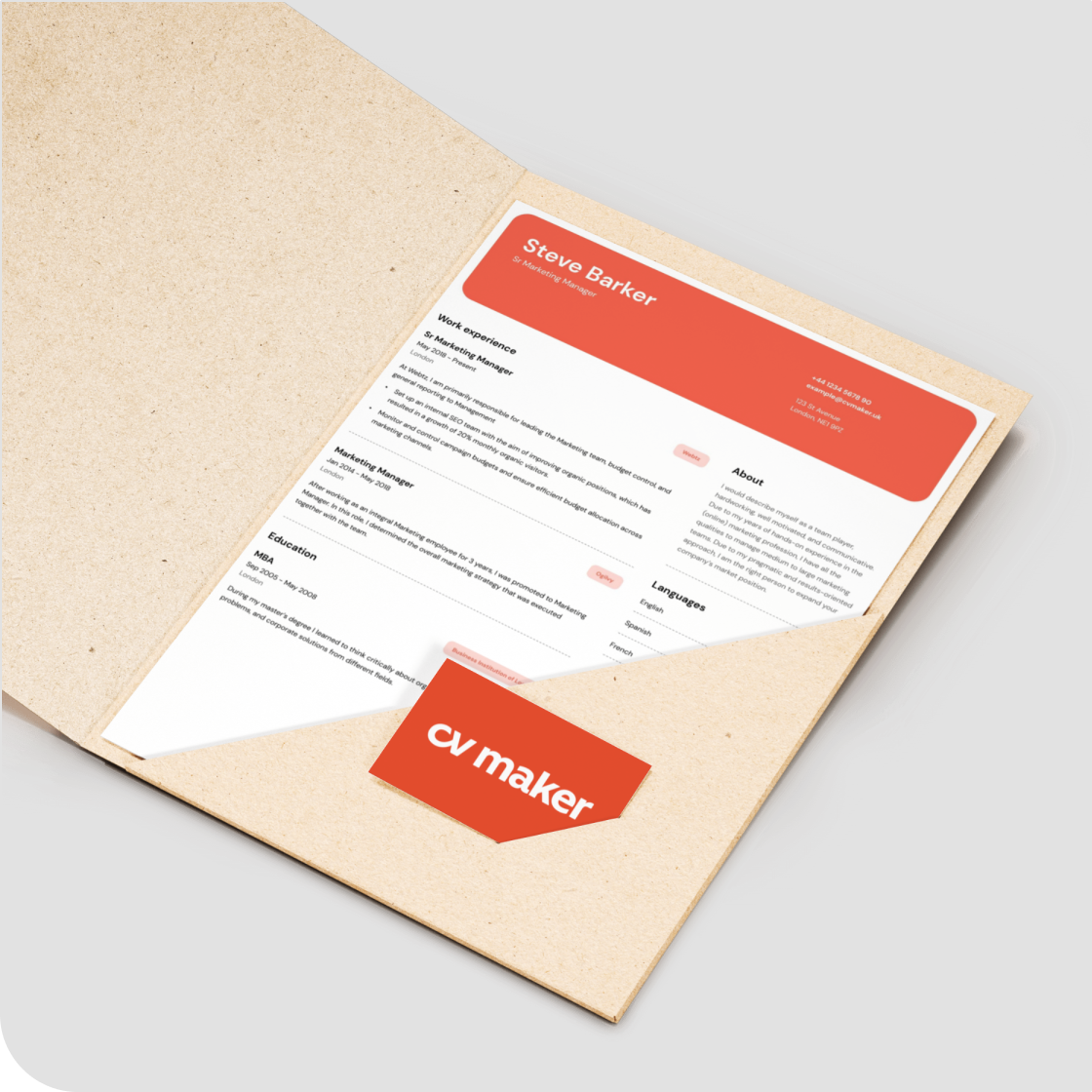
How to Write a Modern CV with Examples
A modern CV puts your most relevant skills, experience, and achievements front and centre, combining a clean layout with content tailored to the role. For UK jobseekers in 2026, an ATS-optimised CV is essential. Without the right keywords from the job description, your application risks being filtered out before it ever reaches a recruiter – regardless of how qualified you are.
This guide provides professional modern CV examples, explains how to structure each section, and how to create an application that works for both recruiters and automated screening systems.

The CV writing process: Where to start?
Start with a master CV containing your full work experience, education, skills, training and achievements. Use it as a foundation, then customise your CV for each role rather than sending the same version to every employer.
Before applying, research the job description and identify the experience, qualifications and skills the employer is looking for. Use these insights to decide which achievements and strengths to bring forward in your tailored CV.
For more guidance, explore how to write a good CV guide for practical advice on structuring and writing each section.
What to include in a modern CV?
With 66% of UK organisations now using skills-based hiring, a modern CV should prioritise relevant skills, measurable achievements and clear evidence of your suitability for the role. Rather than relying on design alone, make strategic content choices that help recruiters quickly recognise the value you can bring.
Use a skills-first CV layout: prioritise the skills and experience most relevant to the vacancy, particularly transferable skills when changing careers or industries.
Show quantified achievements: demonstrate your impact with measurable results, such as “Reduced onboarding time by 30%”, rather than listing responsibilities alone.
Use relevant ATS keywords and phrases: include terminology from the job description naturally throughout your personal profile, skills and work experience. Follow ATS-optimised CV layout principles by using clear headings and readable formatting.
Tailor each application: adapt your CV to the requirements of every role, bringing the most relevant skills, experience and achievements to the forefront.
No work experience? No problem! Learn how to create an effective CV for your first job.
3 modern CV examples for today’s job market
A modern CV should reflect the expectations of your target industry. Explore these examples to see how different candidates can prioritise relevant skills, demonstrate results and tailor their experience to the role.
Explore the following examples for a modern CV format UK.
Modern CV example for creative industries
Creative professionals need to balance personality with clarity. This acting CV highlights performance experience, specialist skills and training in a format that recruiters can scan quickly.
)
Download this CV example - Modern Acting CV Sample PDF.
Modern CV example for graduates and entry-level roles
Without extensive work experience, graduates can compete by emphasising education, transferable skills, projects and relevant extracurricular activities.
) Download this CV example - Modern Graduate CV Sample PDF.
Download this CV example - Modern Graduate CV Sample PDF.
Modern CV example for business and administrative roles
For competitive office-based roles, a modern CV should demonstrate organisation, communication and measurable contributions – not simply list routine duties. This assistant CV example shows how to present experience around employer needs.
) Download this example of a modern CV for a personal assistant role.
Download this example of a modern CV for a personal assistant role.
What is a good modern CV layout?
A modern CV layout combines a minimalist structure with relevant content that is easy for both recruiters and ATS software to scan. Compared with a traditional CV, it places greater emphasis on skills, certifications, and evidence of what you can contribute.
| Modern CV | Traditional CV |
|---|---|
| Tailored to the specific role and its required skills | Uses largely the same content for every application |
| Leads with relevant capabilities, achievements and measurable results | Focuses on job titles, duties and employment history |
| Demonstrates transferable skills and practical experience | Places greater emphasis on qualifications and years of experience |
| Uses keywords aligned with the job description for ATS screening | Written primarily for manual review by a recruiter |
| Provides clear evidence of what the candidate can contribute | Lists experience without always demonstrating its relevance or impact |
Modern CV structure best practices include:
Prioritise demonstrable skills: Include relevant technical and transferable skills alongside qualifications. Skills-based hiring means employers may assess what you can do, not only what you have studied.
Show digital skills: For roles involving remote or hybrid work, mention relevant collaboration tools, project management platforms, or experience with asynchronous communication.
Keep ATS and readability balanced: Use relevant keywords from the job description, but write naturally for the recruiter who reads your CV afterwards.
Use clear formatting: Choose standard headings, readable fonts, strategic whitespace, and a minimalist design rather than graphics that could interfere with ATS-optimised CV formatting.
How to choose a modern CV format
The right modern CV format depends on your career history, experience and the role you’re targeting. In the UK, the reverse-chronological format remains the most widely used, but skills-based and combination formats can work well in specific circumstances.
1. Chronological CV
The most common CV format in the UK, a chronological CV lists your work experience in reverse chronological order, starting with your most recent position. It provides recruiters with a clear overview of your career progression and is suitable for most applicants with relevant work experience.
2. Skills-based CV
A skills-based CV focuses on your relevant abilities rather than placing your employment history at the centre. It can be useful when changing careers, entering a new industry, or highlighting transferable skills, particularly where your previous experience does not closely match the job description.
3. Combination CV
A combination CV brings together elements of chronological and skills-based formats. It allows you to highlight relevant skills while still showing your employment history, making it a potential option for experienced candidates changing careers or targeting a role requiring a specific skill set.
Pro Tip
Skills-based format is an excellent opportunity for applicants new to the industry and with little to no work experience.
What to leave off your CV in 2026
Some details once considered standard on a UK CV are now outdated or unnecessary. Modern hiring practices favour relevant skills, proven achievements and concise information over personal details and traditional formalities.
| Previously expected | What to do in 2026 |
|---|---|
| Full home address | Include only your town or city |
| Date of birth, marital status and nationality | Leave out personal details that do not affect your suitability |
| A professional photograph | Omit it unless appearance is relevant to the role, such as acting or modelling |
| A career objective describing what you want | Write a tailored personal profile showing what you can offer |
| Every job you have ever held | Prioritise recent, relevant experience and transferable skills |
| Detailed lists of responsibilities | Highlight achievements, contributions and measurable results |
| References or “references available upon request” | Remove them and provide references only when requested |
| Hobbies and interests by default | Include them only when they reinforce your suitability or show relevant qualities |
| A signature and the date the CV was written | Leave both off |
| Formal phrases and third-person writing | Use concise, direct language and natural first-person phrasing without pronouns |
| One general CV for every vacancy | Tailor your skills, keywords and evidence to each position |
Key takeaways
A modern CV should reflect how employers assess candidates today, with greater emphasis on relevant skills, adaptability, and evidence that you can meet the needs of the role. Learn how to write a cover letter to send your application via email to recruiters.
Additional tips on how to write a modern CV:
Treat qualifications as part of your overall profile rather than the sole measure of your suitability.
Highlight digital marketing, computer skills and familiarity with collaboration tools when applying for remote or hybrid positions.
Show how you have adapted to new responsibilities, technologies or ways of working where relevant.
Prioritise information that directly supports the role. Don’t include every responsibility from previous positions.
Next steps?
Ready to create your modern CV? Use our AI CV Maker to build a professional CV that aligns with industry standards in 2026. Explore our guides to average working hours in the UK and the average UK salary to understand typical working patterns and pay. Once you start applying, use these tips to track your job applications and keep your documents organised.
FAQs
Who should use a modern CV template?
A modern CV template can suit most job seekers, provided its style is appropriate for the role and industry.
Is a modern CV good when you have no work experience?
Yes, a modern CV can help you highlight relevant skills, education, projects, and other experience when you have limited work history. Read more about writing a CV with no experience and job interview preparation.
Do recruiters like a modern CV?
Yes, recruiters can respond positively to a modern CV when it remains professional, clear, and relevant to the position.
When to pick a modern CV template?
Choose a modern CV template when applying to creative industries, startups, or roles where contemporary presentation is valued. Learn more about the best colours and fonts to choose for your CV.